
Beyond Glass: ANB’s Next-Generation AQ2 Delivers Hassle-Free pH Sensing
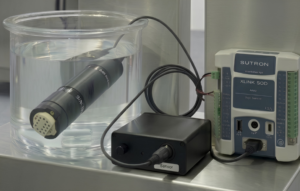 Whether you are managing coastal cage culture, intensive shrimp ponds, or complex land-based operations, water quality data is critical to managing risk. However, in high-density Recirculating Aquaculture Systems (RAS), maintaining absolute precision is both uniquely critical and notoriously challenging.
Dissolved Oxygen (DO) is universally recognized as the primary life-support metric. However, pH is equally critical as the fundamental driver of water chemistry, particularly in the RAS closed-loop environment. Inaccurate pH data, as a result of undetected sensor drift, can have cascading biological consequences. A false-low reading might trigger unnecessary buffering, disrupting biofilter efficiency, while a false-high reading can mask the exponential increase of un-ionized ammonia toxicity.
Ultimately, drifting pH data isn’t just an inconvenience; it introduces a direct, preventable risk to stock. Yet, from an operational standpoint, pH is often an undervalued metric, partially due to the unreliable nature of existing sensors and the high cost associated with managing them.
While filtration and feeding automation have advanced rapidly, the industry still largely relies on decades-old technology: the glass pH probe. By nature, these are fragile and susceptible to drift. Managing this risk requires accepting a predictable, labour-intensive cycle of intervention, which involves constantly pulling sensors for cleaning, running buffer calibrations, and ensuring backup units are stored perfectly wet. At a commercial scale, this absorbs engineering bandwidth that could be spent optimizing production.
At ANB Sensors, we recognised the inherent flaws of glass probes, which drove the development of our original AQ and OC series. These series successfully demonstrated the calibration-free and dry-storage benefits of our solid-state technology. To be clear, no sensor in a high-fouling environment is truly maintenance-free. However, our sensor only requires a quick physical abrasion of the transducer surface, which takes around 15 seconds. Compared to the burden of a 30-minute recalibration and maintaining a fresh stock of buffer solutions, the ANB sensor drastically reduces operational downtime, allowing facility managers to streamline workflows and lower the total cost of ownership.
Building on years of customer feedback and real-world testing, we recently rolled out the next generation of our calibration-free technology – the AQ2. This firmware protocol rewrite brings significant enhancements to both sensor performance and usability. Key improvements include better accuracy and baseline stability in low-salinity environments, faster response times to changing water conditions, and quality-of-life features such as consistent data outputs for easier integration and automatic dynamic switching between fresh and saline water.
We also recognize that adopting new sensor technology shouldn’t require overhauling your current infrastructure. To ensure seamless integration, we launched the AquaLink and AquaView solutions alongside the AQ2. By pairing our native RS232 and RS485 digital outputs with a robust digital-to-analogue converter, these solutions provide standard 4-20 mA and 0-5 V outputs, as well as an optional local display. This guarantees that the next-generation AQ2 can be easily integrated into virtually any existing SCADA or PLC controller.
AQ2 units are currently being evaluated in commercial and research trials across a variety of species and water conditions throughout Europe, with promising data confirming the performance enhancements of these next-generation sensors.
I will be attending Aquaculture UK in Aviemore this June. If the experience with traditional pH sensors I’ve described is familiar to you, and you are looking for a reliable alternative, let’s get together.